





Don't Pay Fees!
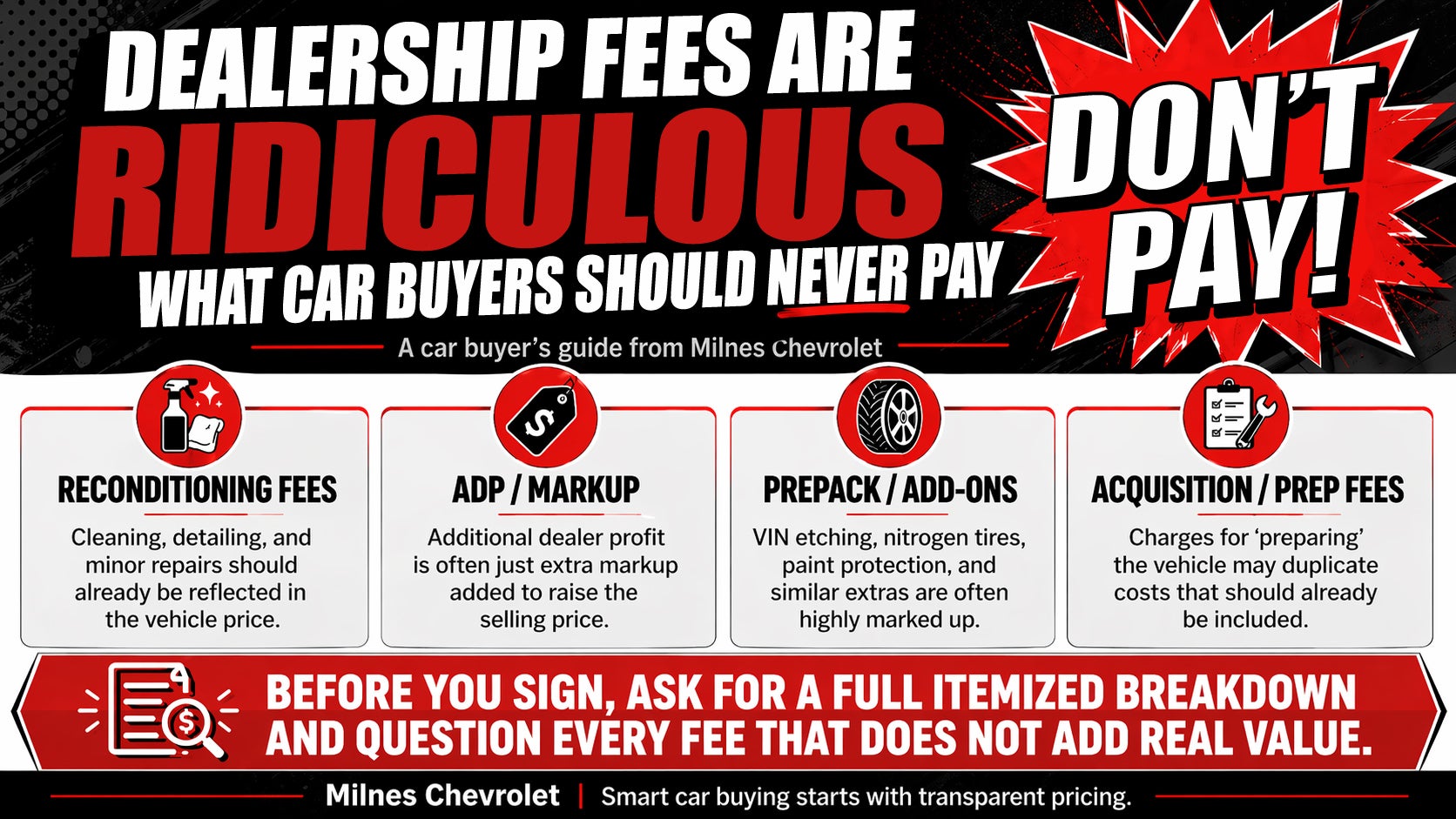
Dealership Fees Are Ridiculous: What Used Car Buyers Should Never Pay
Some used car fees are legitimate. Others are just extra charges dressed up to sound official. Smart buyers should focus on the full out-the-door price, question unclear fees, and push back on charges that do not add real value.
Quick Outline
What this article covers
- Which used car fees buyers should question
- Why some add-ons are overpriced
- How to spot padded charges before signing
- What matters more than the monthly payment
- What buyers should review before agreeing to the deal
Dealership Fees Are Ridiculous: What Used Car Buyers Should Never Pay
Shopping for a used vehicle should not feel like a game of “wait, where did that extra charge come from?”
Yet that is exactly how many buyers feel when they sit down to review final paperwork. A vehicle that looked affordable online can suddenly become much more expensive once the extra fees, prep charges, and dealer add-ons start showing up.
The truth is simple: some charges are normal, and some are just padded profit.
At Milnes Chevrolet, we believe buyers should understand what they are paying for and why. The more clearly you see the numbers, the easier it is to protect your budget and make a smart decision.
Not Every Fee Is Bad, but Some Deserve Pushback
There are certain costs buyers should expect, like tax, title, registration, and certain document-related charges allowed by law. Those are part of the transaction.
What buyers need to watch for are charges that are vague, inflated, duplicative, or presented as mandatory when they may not be.
That is where many people overspend.
Reconditioning Fees
This is one of the easiest fees to question.
Dealers often inspect, clean, detail, and sometimes repair used vehicles before putting them up for sale. That is normal. But when a separate reconditioning fee gets added on top of the advertised price, buyers should stop and ask why.
In many cases, the cost of getting the vehicle ready for sale should already be built into the asking price.
If a buyer sees a separate charge for reconditioning, it is worth asking:
- What exactly was done to the vehicle?
- Why is that not already included in the listed price?
- Is this fee required, or can it be removed?
ADP or Additional Dealer Profit
This one is exactly what it sounds like.
ADP, or Additional Dealer Profit, is often just markup. It may appear on high-demand vehicles or be buried in the numbers under a less obvious label, but the goal is usually the same: increase the selling price.
That does not mean every dealer uses the exact same wording, but buyers should always be cautious when they see a charge that does not connect to a real service, tax, registration cost, or optional product they asked for.
If the fee sounds vague, it deserves a direct explanation.
Prepack and Add-Ons
This is where buyers often get nickel-and-dimed.
Many dealerships add accessory packages or extras before the customer even asks for them. These may include:
- nitrogen-filled tires
- VIN etching
- paint protection
- fabric protection
- wheel locks
- anti-theft products
- miscellaneous appearance or protection packages
Some of these items may have value to some buyers. The problem is that they are often priced far above what they cost elsewhere, or presented like they are mandatory.
They usually are not.
A smart buyer should ask:
- Did I request this?
- Is this optional?
- Can it be removed?
- Is it worth this price?
Acquisition or Prep Fees
This is another category where the wording can make a fee sound more official than it really is.
An acquisition fee, prep fee, or similar charge may be described as part of getting the vehicle ready, processing it, or bringing it to sale condition. But if the explanation is vague or overlaps with work that should already be covered in the vehicle price, it deserves scrutiny.
Buyers should never feel embarrassed about asking for every line item to be explained. If the dealership cannot clearly justify a fee, that is a red flag.
The Biggest Mistake Buyers Make
Too many buyers focus only on the monthly payment.
That is exactly how unnecessary charges sneak through.
A payment can be adjusted by changing the term length, down payment, or financing structure. That does not mean the deal is better. It may just mean the extra fees are being buried more effectively.
What matters most is the out-the-door price.
That number gives buyers the clearest picture of what they are actually agreeing to pay.
What Smart Buyers Should Do Before Signing
Before signing any used car paperwork, buyers should:
- ask for a full buyer’s order
- review every fee line by line
- question anything unclear
- compare total price, not just payment
- ask whether add-ons are optional
- push back on charges that do not add real value
Confidence matters in car buying. A transparent dealership should be able to explain the numbers clearly, without pressure or confusion.
Final Thoughts
Used car buyers do not need to accept every fee just because it appears on the paperwork.
Some charges are legitimate. Some are optional. Some are simply inflated. The key is knowing the difference.
When buyers slow down, ask questions, and focus on the full price instead of the sales pitch, they put themselves in a much stronger position.
That is how you protect your money and make a better purchase.
FAQ
Are all dealership fees bad?
No. Taxes, title, registration, and certain legal documentation charges are normal. Buyers should focus on the vague, padded, or optional charges that may be added on top.
Are dealer add-ons always a scam?
Not always. Some buyers want certain products or protections. The issue is whether the add-on is optional, fairly priced, and clearly explained.
What is the most important number in a used car deal?
The out-the-door price. That tells you what you are really paying.
Can buyers negotiate these fees?
Sometimes yes. At a minimum, buyers should question them and ask whether they can be removed or reduced.
Author Bio
Milnes Chevrolet Team shares practical car-buying advice to help drivers make informed decisions with more clarity, confidence, and value.

May not represent actual vehicle. (Options, colors, trim and body style may vary)
The Manufacturer's Suggested Retail Price excludes tax, title, license, dealer fees and optional equipment. Dealer sets final price.